weaving magic

•06/11/2013 • Leave a Comment
17th-century patka at Bharat Kala Bhavan

17th-century patka at Bharat Kala Bhavan

My studies of the Kashmir shawl have been blessed by an abundance of visual resources in the many lavish, large-format picturebooks – not to diminish the authors’ texts and ideas.  Because of the interest in dating individual shawls, often from little more than their placement within the design history, the pictures are usually arranged to illustrate the evolution of style from early botanical naturalism to the irresistible influences of foreign markets, technological changes, and fashion’s craving for newness.  As a tapestryweaver I respond most to the early painstaking representations of real flowers, and the recognizable bouquets, sprigs, and meandering vines they directly inspired.
There is a shawl that I have found extraordinarily elegant in the restraint of its composition and the naturalism of its imagery, that I have kept returning to, to analyse and reconstruct the three basic pattern repeats that are intricate in themselves but simply-arranged to form the whole design.
It’s described as a patka, a narrow length of shawlweaving worn as a waistband, dated variously as from early or late in the 17th century, from which few fragments of fragile pashmina fabric survive, let alone such an intact and beautiful example.  Today it resides in the collections of Bharat Kala Bhavan, Benares Hindu University at Varanasi, and the clearest published photo I have of it is from “Pashmina: The Kashmir Shawl and Beyond” by Janet Rizvi with Monisha Ahmed, Marg Publications, Mumbai, 2009, p. 76, photo by Dilip Kumar.  As a gardener, I’m drawn to the fact that the floral subject of this design is the columbine (aquilegia sp.), just like ones which have colonized the roadside ditch outside my rural Canadian home.  The Mughals were connoisseurs and patrons of flower gardens – no surprise that as the patrons of shawlweaving they would appreciate a recognizable and flattering portrait.
component designs

The patka as a whole demonstrates a straightforward use of the principle that the overall composition can be efficiently archived and reproduced by the weaver simply repeating pattern units of a manageable size.  Three pattern units are all that were required: the main motif a boteh composed of blossoms and leaves repeated across the palla end-panels, enclosed by a band design above and below, and a side-border hashia design running the length of all, with a plain central field.
band pattern in repeathashia in repeatOne of my earliest reconstructions leading to a woven sample was of the band design – the size of the repeat is 34 lines of talim instructions (68 wefts) long by 81 nals (324 warps) wide.  The hashia design obviously has different proportions and is more elaborate, 42 nals (164 warps) wide, by 284 lines of talim (568 wefts) long in one complete repeat, but the second half of the unit is the reverse of the first half, so “only” 142 lines of talim are required – for the second half each talim line can just be read in reverse.

original - brick grid - square grid


Now I want to tackle the project of drafting the entire boteh motif, leading to a woven sample copy.  Up until now I have drafted one selected blossom and woven samples to illustrate another key point in the process, whether a line of talim instructions should be followed for two, or four, weft picks.  This draft will contribute to the overall draft, as I follow a process I developed before, of assembling the drafts of individually-worked-out details.  The one blossom covers about 30 nals (120 warps) in 50 talim lines (100 wefts), projecting the size of the complete motif to be about 90 nals (360 warps) wide in 400 lines (800 wefts) of talim.
Tasara Feb 2014This winter 2013-14, I hope to be visiting India while I undertake the project, with a loom set aside for me at Tasara Centre for Creative Weaving, in Calicut/Kozhikode, and I will be available for consultation and travel.  Contact me by e-mail.
With the completion of this boteh design draft and revision of the two border designs in the light of now having a clearer published photo, an accurate modern reproduction of the whole ensemble can be attempted, of this rare and beautiful 400-year-old precedent, using traditional talim and weaving techniques, by traditional weavers.  I would be pleased to provide the talim.

“Science Experiment”

•01/11/2013 • Leave a Comment
Science Experiment

Science Experiment

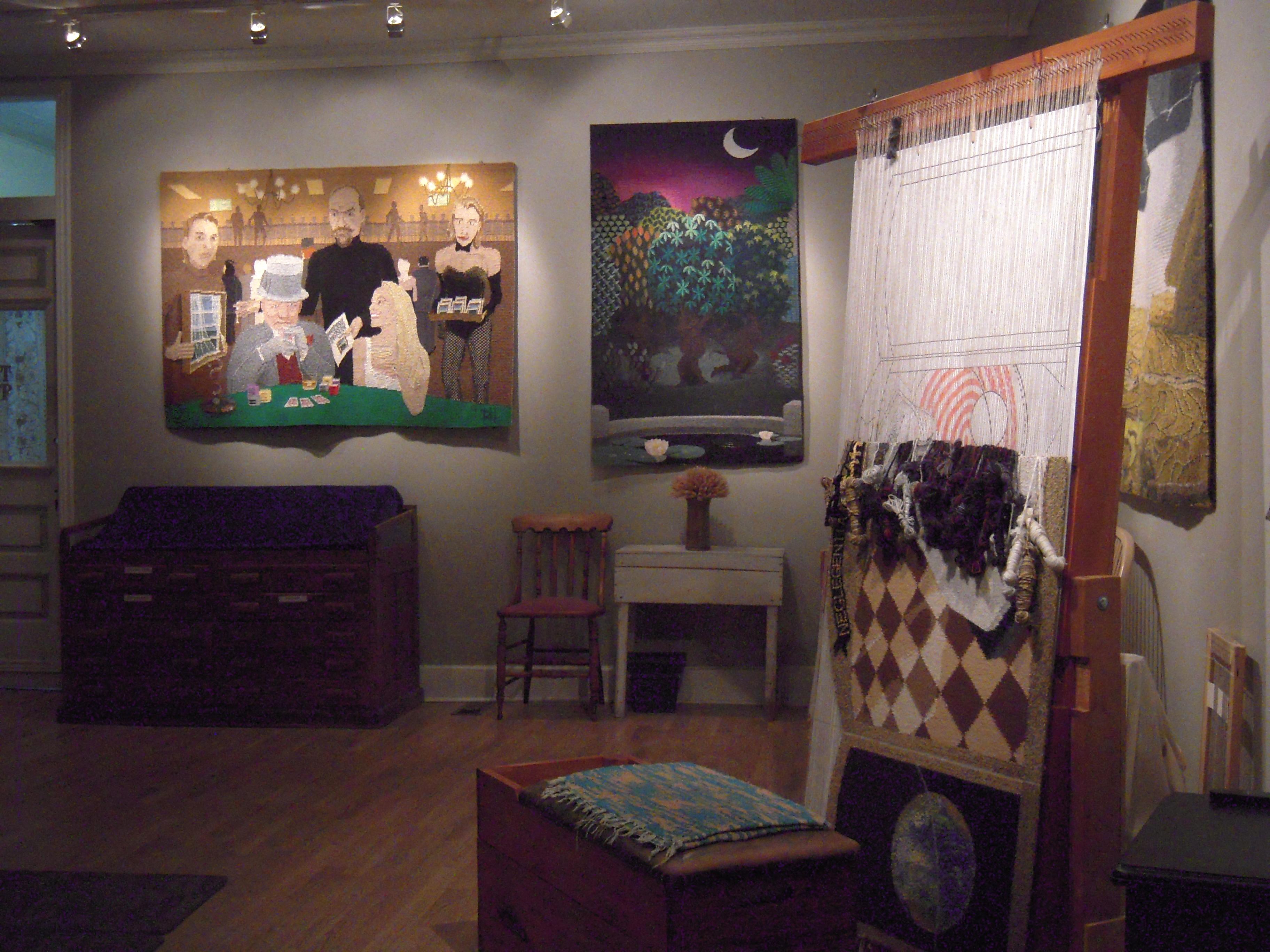
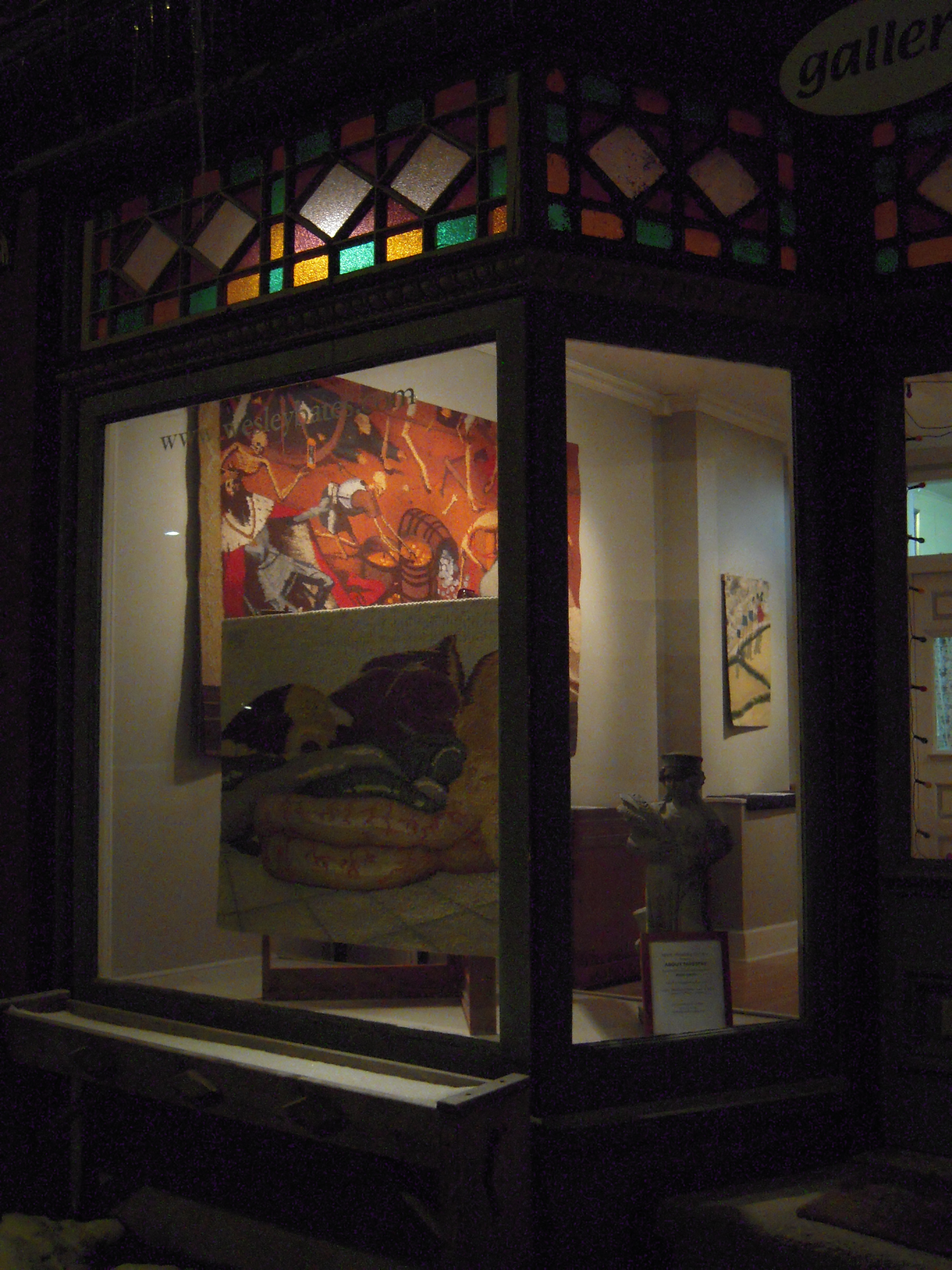
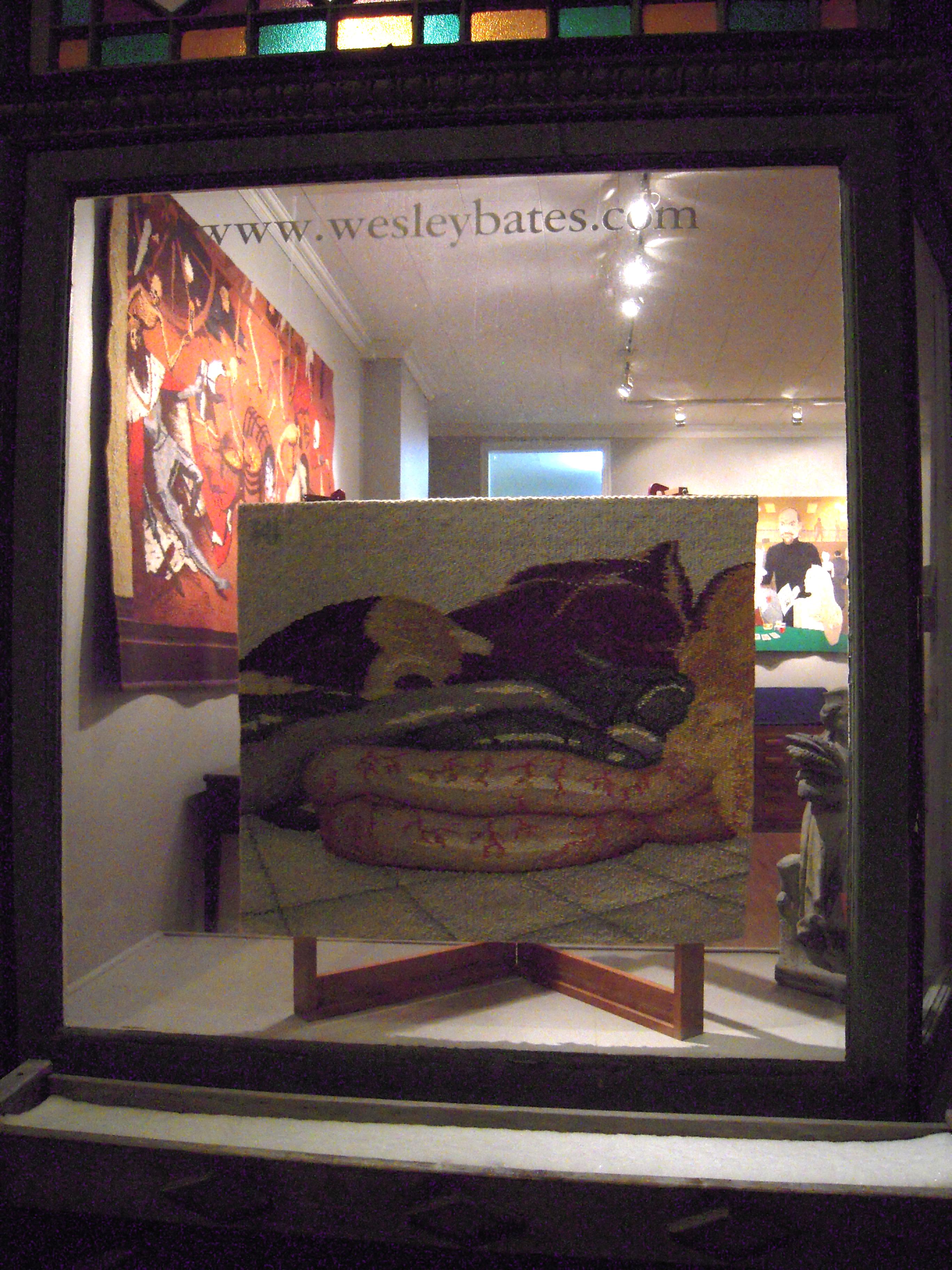
I’m often drawn to the narrative potential of tapestry – figures and objects interconnected in ways that can be linear or associative, sequential or simultaneous, in one panel or a series of scenes.  Another story-telling format evoking the same kind of historical respect is the tryptich, an older and more high-minded version of the three-panel comic strip – or “cartoon”, which brings us back to the name for the tapestryweaver’s full-scale design drawing.
The Latin inscription is another badge of historical authenticity, a subject I was cornered into studying for three years in high school, almost 50 years ago.  The words “Neglegentia confidite” are almost recognizeable from their English derivatives “negligence” and “confide”, and are intended to mean “Put your faith in carelessness”, or not so literally, “Know that sooner or later you’re going to screw up.”

Welcome to Ecuador

•21/07/2013 • Leave a Comment

Otavalo market day 3Fascinating to hear of all the interest in seeking asylum or retirement to Ecuador lately.  Following on my last posting, a recommendation of some of my favourite travel books, there is one concerning Ecuador that springs to mind: “The Farm on the River of Emeralds” by Moritz Thomsen (Vintage Departures / Random House edition, New York, 1989).  It paints an up-close-and-personal picture of the author’s determination to build a rural homestead in the coastal jungle province of Esmeraldas, northern Ecuador.  Thomsen (1915 – 1991), an American Peace Corps veteran, wrote with sensitivity, insight, and engagement, about his ambitions and disappointments in trying to make a life for his 53-year-old self, and share the realities of the rural-poor folk around him.  The writer Wallace Stegner called it “…a heart-breaking book about good intentions and idealism crashing against poverty and cultural differences…bound to be read with fascination, amusement, and something close to horror.”  Dating from his experiences in the 1970’s, it’s not that bad by today’s standards – no looming disasters, invasive development, or shifting battle-lines, just the average rural challenges of the ever-encroaching jungle and the traps of poverty, in a hot-house environment.
I haven’t read his earlier memoir, “Living Poor: A Peace Corps Chronicle”, also set in Ecuador, but I came across a wonderful metaphor he constructed that could be the book’s epigraph: “Living poor,” he wrote, “is like being sentenced to exist in a stormy sea in a battered canoe, requiring all your strength simply to keep afloat; there is never any question of reaching a destination. True poverty is a state of perpetual crisis, and one wave just a little bigger or coming from an unexpected direction can and usually does wreck things.”  Then there is a sequel to his experiences in Ecuador, “The Saddest Pleasure” (from “travel is the saddest of the pleasures”, a line by Paul Theroux), even more intensely self-reflective.
Otavalo market day 1 In 1976, I travelled for two and a half months in the Andean countries of South America, Colombia, Ecuador, Peru, and Bolivia.  I was still pretty naive, but by this time I had already taken a year-long sojourn to Europe and overland to India, in 1972-73.  Come to think of it, I am still pretty naive, travel has done little to change that, and the sense I make of “the saddest pleasure” is that it is entirely pleasurable except that all those pleasures are eventually left behind.  We are all travellers, threading our ways through the tapestry of this world.  Anyway.Otavalo market day 2
Overland along the backbone of South America meant following the route of the Pan-American Highway with few alternatives, so very often it meant falling in step with other travellers, stopping or moving-on by consensus, partnerships forming and re-forming due to coincidences, pick-up relationships, information-sharing.  The cultural environment was a lot more familiar, but more raw and dangerous than west or south Asia – to me it approximated the “Wild West” of open landscapes and the rough imposition of modernizing habits and developments on defensive indigenous peoples.  On an earlier visit, a Colombian friend had pointed to the juxtaposition in a village square of a church facade and a billboard advertising a soda-pop brand, calling them the twin oppressors of his culture.  Maybe I am just naive about my own role in all this, not one of the shock troops of western development, but a camp-follower.  Maybe there is no such thing as “asylum”, retirement, or pleasure without reflection.

Book Ends of Empire

•02/04/2013 • Leave a Comment

For a long time, I have been a fan of the genre known as “travel literature”, escapist yes, not into fantasy or science fiction, but to real places and often backwards in time.  More recently, I’ve thought of posting a review of some of my favourite travel books, adventures to make the reader feel more content and grateful to sink into an overstuffed armchair on a long winter evening, pulled up close to a crackling campfire somewhere on the Tibetan plateau.  Who knew that Ian Fleming, originator of the James Bond franchise, had an older brother Peter who made an “undeservedly successful” venture across western China from “Peiping” to Srinagar in the 1930’s, and wrote about it vividly and easily, because it was not the product of imagination or research, but experience?
William Moorcroft, Lahore MuseumThen I realised that several of the books I would turn to first, are connected by more than just genre, acquisition, and enjoyment.  As a student of the shawlweaving tradition of Kashmir, I’ve had quoted to me from every book on that subject the observations of William Moorcroft, an early 19th-century British colonialist who made his way into Central Asia, supposedly in search of breeding stock to improve the quality of cavalry horses in subtropical, lowland India.  At the time when the East India Company, based in Calcutta, was extending its control over the sub-continent, Moorcroft paused in Srinagar to study the extensive and already famous shawl industry, in the middle of an epic six-year journey from which he never returned.
So: I was browsing in a bookshop for a then-recently-reviewed book about Afghanistan by Karl Meyer, and came up with an earlier work (“Tournament of Shadows: The Great Game and the Race for Empire in Asia” by Karl Meyer and Shareen Brysac, Abacus/Little, Brown and Company (UK), 2001), a colourful and fast-paced history, of rather the “great man” variety, that opens with… William Moorcroft, and closes 600 pages later in mid-20th-century with another chap I keep bumping into, Nicholas Roerich.
I wanted to know all I could by and about Moorcroft, not only in the hope of discovering some overlooked detail of his reports on shawlweaving that might only be useful to a specialist, but also because he was one of the earliest European documentarians treading an unspoiled path, and it’s a moot question whether he was officially a British spy.  I finally found a reprint of his two-volume “Travels” (“Travels in the Himalayan Provinces of Hindustan and the Panjab, from 1819 to 1825” by William Moorcroft and George Trebeck, Oxford University Press, Karachi, 1979), originally edited from his papers by H. H. Wilson in 1841.  This was in a chaotic little bookshop in Faletti’s Hotel, Lahore, where my initial inquiry was met with a negative, but the elderly proprietor cleared a space and sat me down to his self-prepared tea.  As my eyes wandered, I discovered the books in a stack practically at my elbow – a test of my kismet.
In the early going Moorcroft’s account, always filled with acute observation and lived experience,  seems pedestrian in more ways than one.  Following traditional trails through hitherto unmapped territory he is at pains to record such things as distance travelled, on which bank of the river, and how many tributaries crossed.  But deep in the second volume there are satisfyingly dramatic days as Moorcroft escapes imminent robbery and murder by seeking refuge in the home of a religious elder and appealing for the traditional protection of pashtunwali.  In the end it was a fever that claimed him.
Alberto Manguel once said that anyone who hasn’t already read Rudyard Kipling’s “Kim” (many editions) is in for a treat – true for no one more than me.  An adventure novel first published in 1901, its old-fashioned romanticism and over-the-top local colour is easily as much fun as the first, young Harry Potter film (which I first saw on late-night TV one February, huddled under my blanket in a drafty, down-market Paharganj hotel room).  But the connection here is that Kipling must have been familiar with Moorcroft’s “Travels”, if only for the intelligencer’s covert trick of counting paces along the trail to map his route.
The last word on Moorcroft is an in-depth biography (“Beyond Bokhara: The Life of William Moorcroft, Asian Explorer and Pioneer Veterinary Surgeon” by Garry Alder, Century Publishing, London, 1985), long out-of-print.  Moorcroft’s early years were as accomplishful as his later travels: born in 1767, he studied medicine, then trained in France (at the time of the revolution) in veterinary medicine.  Specializing in the treatment of horses, he set up a thriving practice catering to the carriage trade in London in 1792, but eventually accepted a post with the East India Company to manage their horse-breeding program in Bengal in 1808.  Restless and independent-minded, he was an evident patriot but unpopular with his Company superiors, so whether he was on the payroll as a spy, or contributed his intelligence-gathering as a loyal subject, seems a fine point.  During his travels, his medical skills usually made him a welcome guest.  Garry Alder for his part must have been a true admirer, retracing Moorcroft’s explorations, and reconstructing his own manuscript lost along the way.  In my own small but persistent way, I eventually located a copy of “Beyond Bokhara” at the Toronto Reference Library.  As I paged through it to make a complete photocopy, I had the distinct sense that, acquired when it was new 20 years earlier, it had, sadly, never been opened.
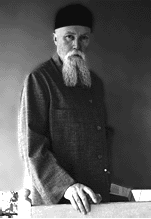
Nicholas Roerich from american-buddha.comAt the other end of “Tournament of Shadows”, I’m prompted to recommend Nicholas Roerich not because his book is as rivetting, but because he was as willful and eccentric in his accomplishments and travels.  Russian-born of Scandanavian ancestry, he is best-remembered as a painter and stage-designer, recognized early for collaborating with Diaghilev on ballet productions by Borodin and Stravinsky.  A political moderate and dedicated cultural preservationist, he emigrated from Russia after the revolution, moving to London and New York in the early 1920’s, touring, exhibiting, working on various causes and projects, enjoying celebrity and friendships with notables of the time, nominated three times for the Nobel Peace Prize.  A Theosophist, he embarked between 1925 – 1928 on a trek through Central Asia and western China in search of Shambala, enduring great hardship barred at the frontier from entry into Tibet, and subject to suspicion as a possible spy.  He recorded his experiences in “Altai-Himalaya, A Travel Diary” (Adventures Unlimited Press; Kempton, Illinois, 2001).  His final years were spent at Naggar in the Kulu Valley, northern India, where he died in 1947.  In 1985, my late partner Ellen and I spent several rainy days at a former royal hunting lodge converted to a government tourist guest-house, perched on the side of the valley overlooking Naggar and Roerich’s home, now preserved as a museum.  Some 165 years earlier, William Moorcroft passed by up the valley and noted the hunting lodge, early on the journey to his destiny.

pictures at an exhibition

•24/03/2013 • Leave a Comment

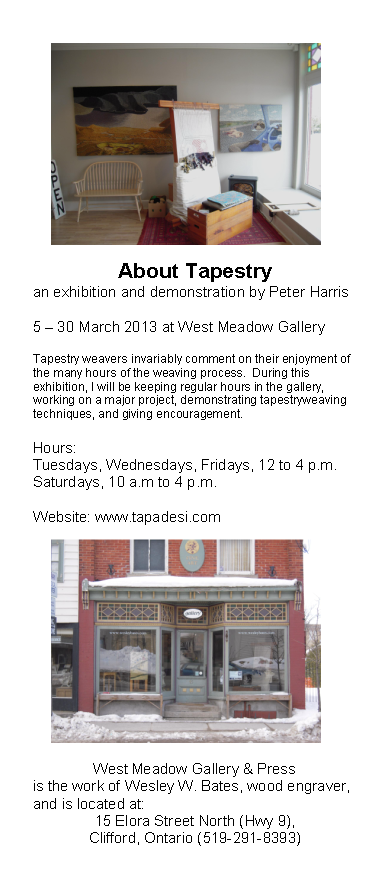
West Meadow flyer

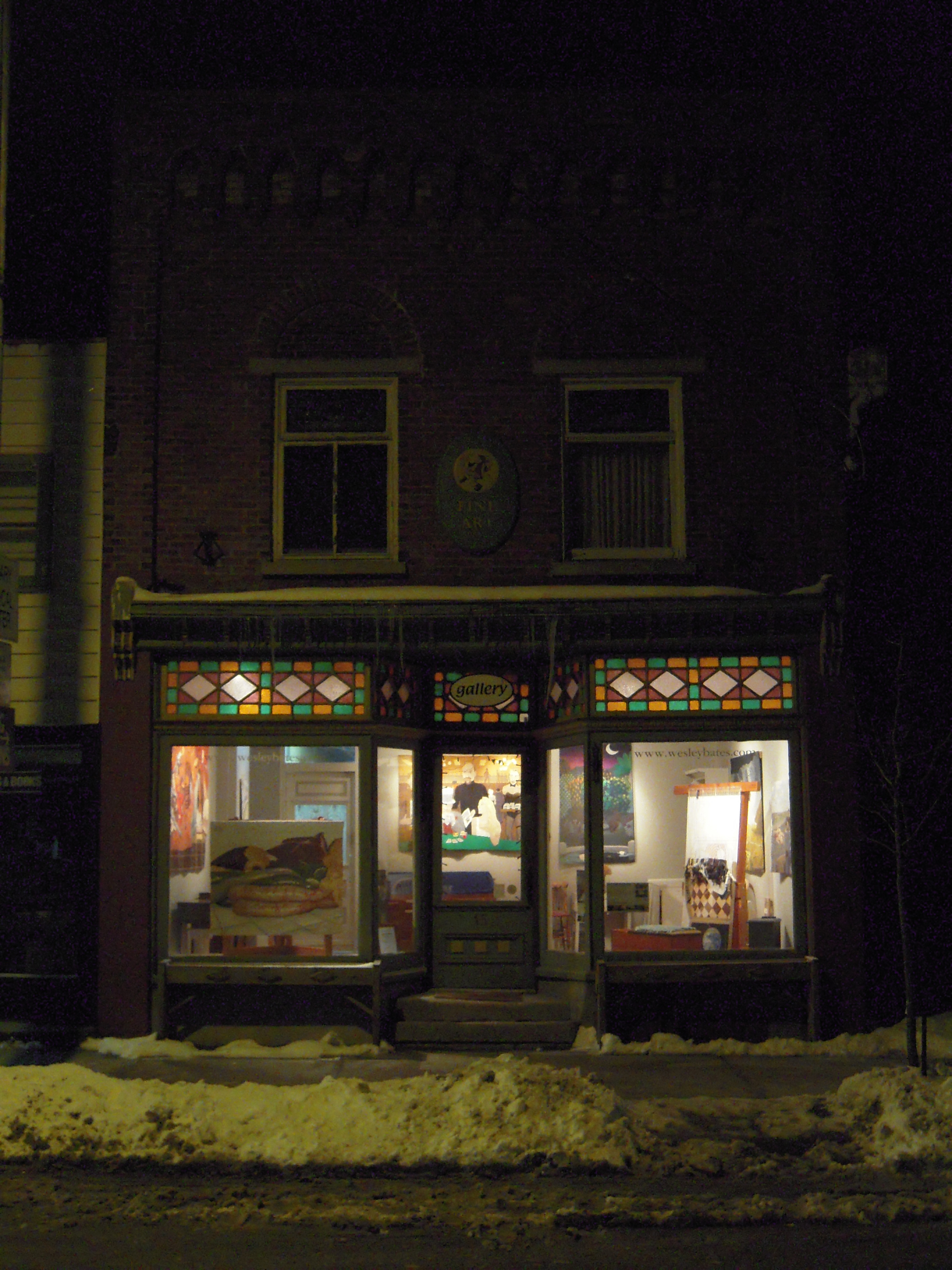
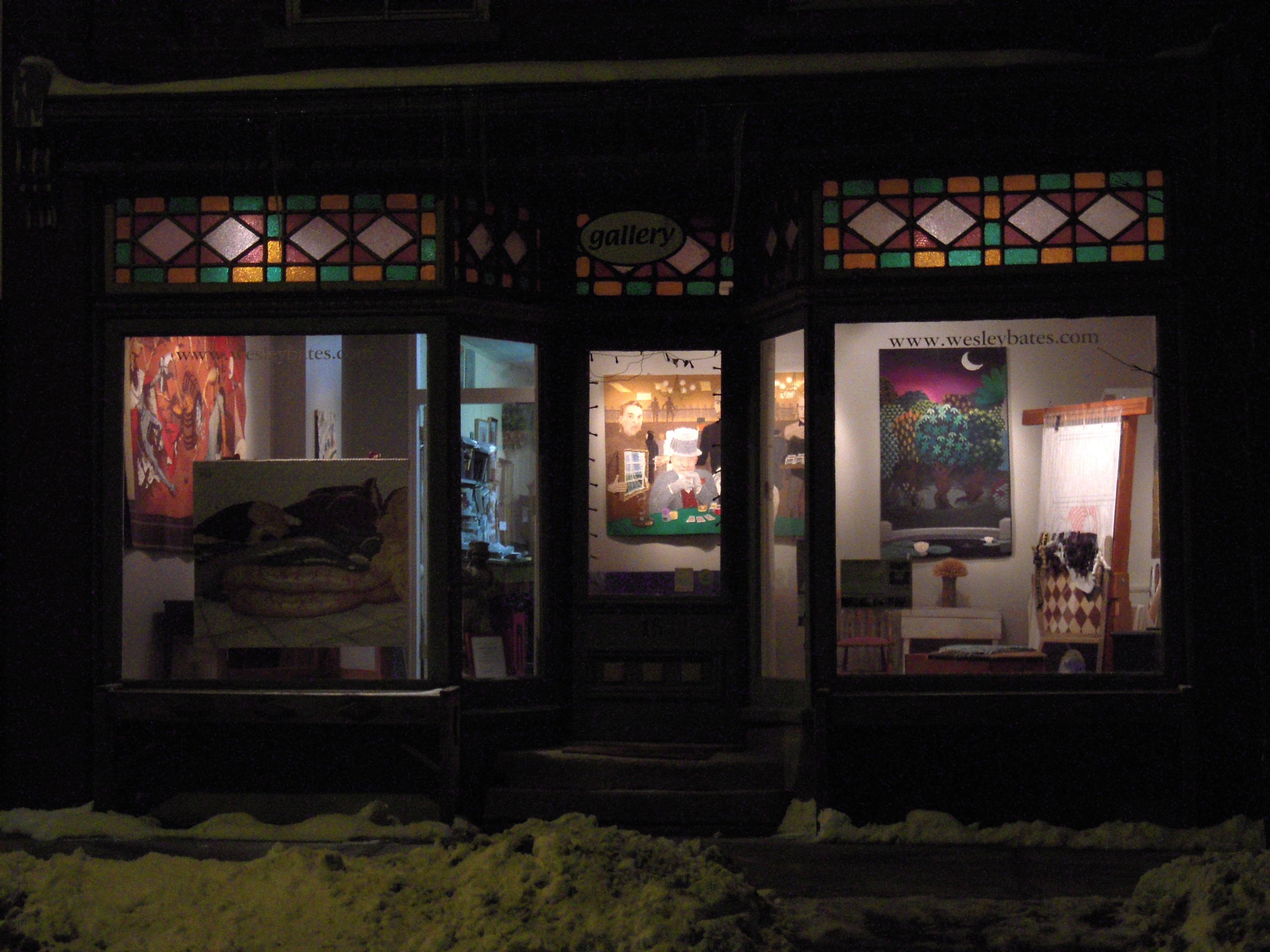
DSCN0066 DSCN0040 DSCN0050 DSCN0053 DSCN0063DSCN0046

A talim with too many half nals

•27/11/2012 • Leave a Comment

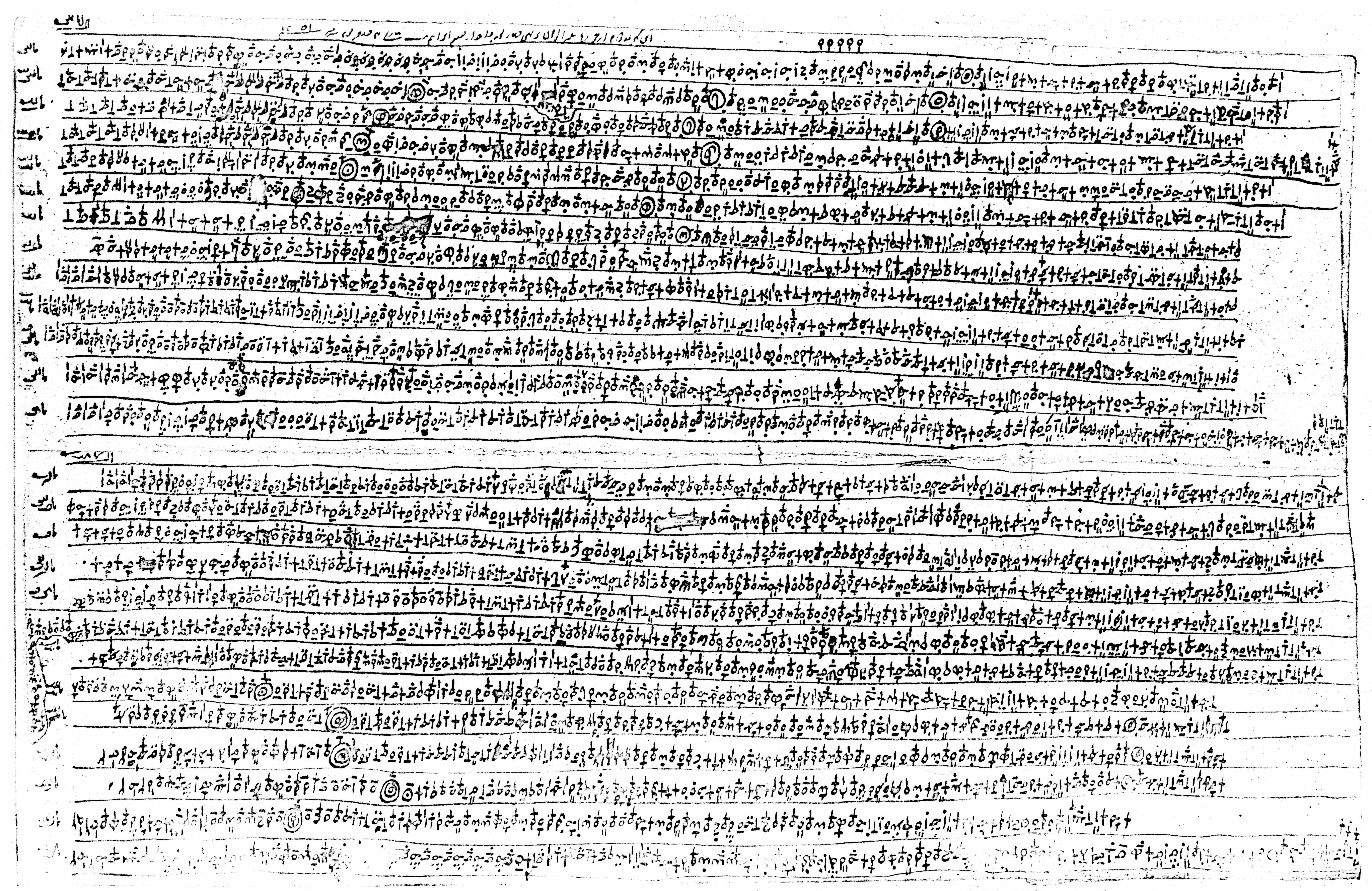
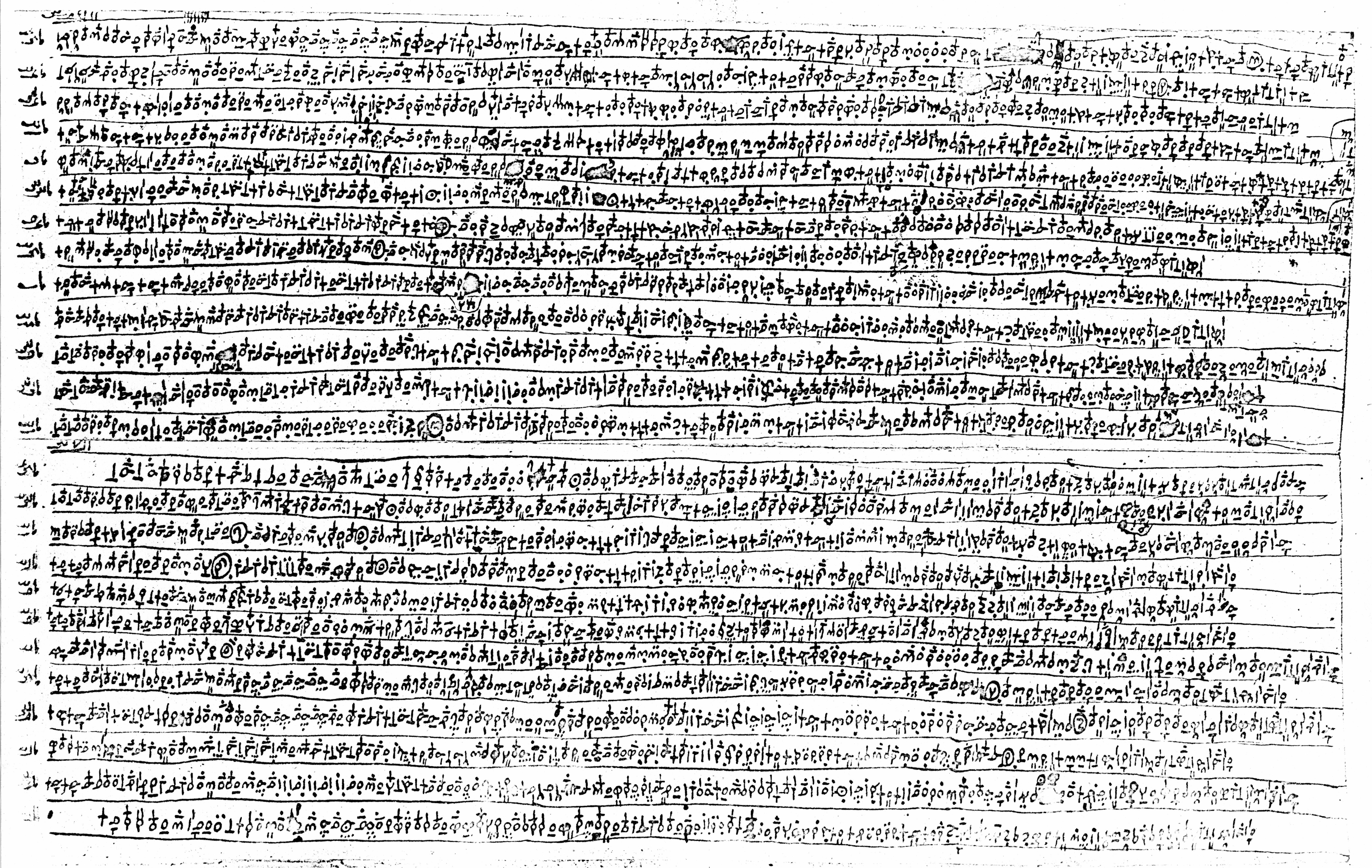
Recently I have been working on a revised draft of two pages of photocopied shawl talim that were sent to me back in 1998 by Dr. Jon Thompson.  They show four scrolls of talim instructions with groups of 12 and 13 lines of text, totalling 51 lines, all greatly reduced in scale to fit A4 sheets of paper.

thompson talim p.1

thompson talim p.2

While I have gotten used to seeing shawl designs as detailed as they could be, with weft passes of one or two nals predominating, even a preliminary look at this talim reveals a profusion of “half” nal symbols, specifying that the weft passes under just one warp thread, or under several but with its placement accurate to one warp thread exactly.  (“Nal” means “pair” and in the 2/2 twill fabric structure of shawlweaving, where at each treadling of the loom two adjacent warp threads are raised and the next two lowered, that pair of raised threads is the usual unit of counting the distance a coloured weft thread is inserted before it is exchanged for the next colour.)

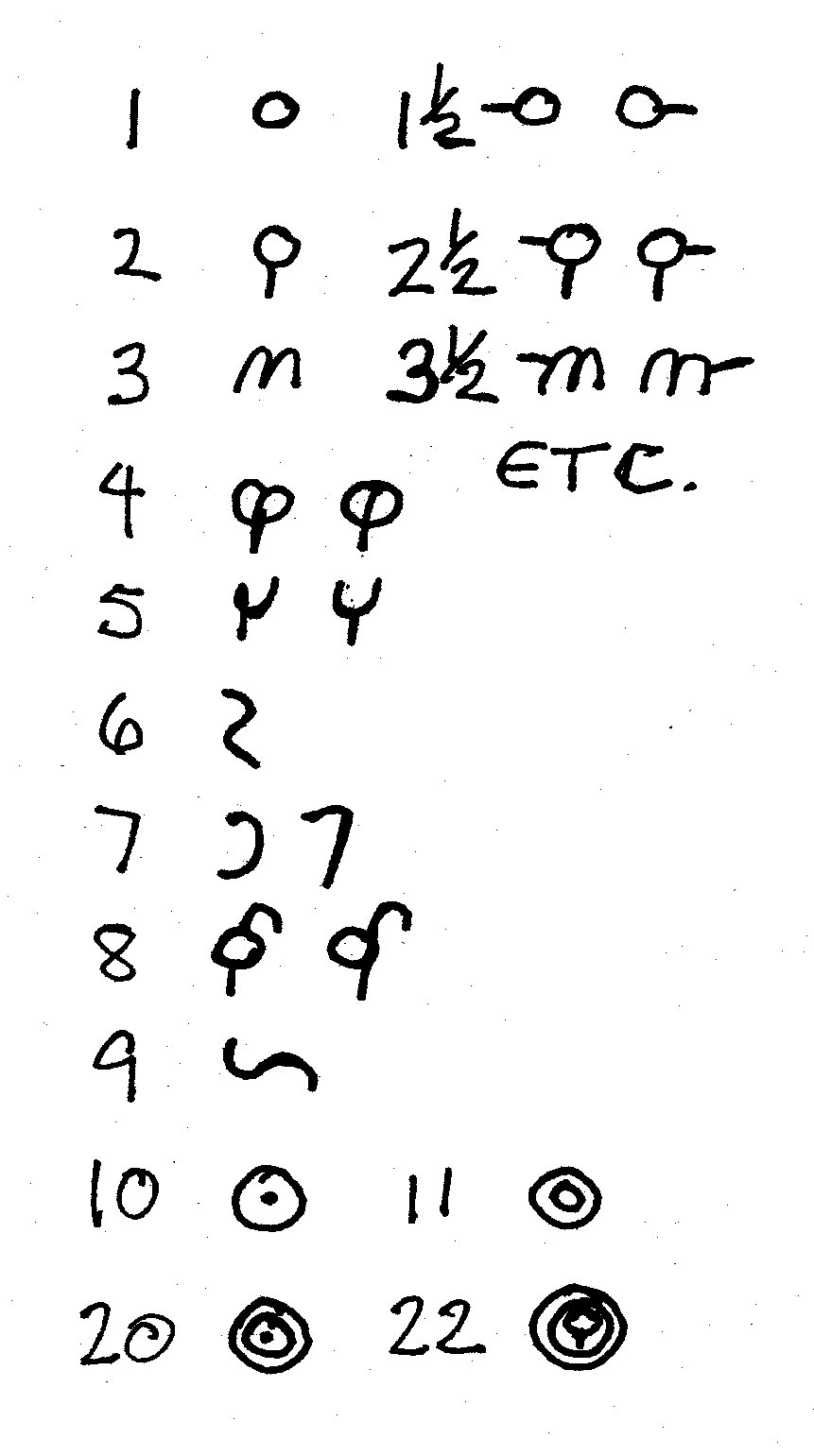
talim number symbol key

Half-nals are routinely used in old shawl talim at the ends of alternate talim lines to signal their placement in relation to the twill weave structure – like the half bricks at the ends of alternate courses of a brick wall – and can be used occasionally within the design instructions to give the best possible placement and resolution of fine details.  Normally, weft threads are exchanged in the slightly wider space between nals, but half nals require that weft threads are exchanged between the two warp threads of a pair.  It takes much more effort on the weaver’s part to keep accurate count, to reach in between the fine warp threads, and just to navigate the thicket of crowded weft threads on the working side of the fabric.

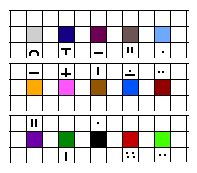
talim colour symbol key

My first attempt to draft a design from this talim produced a field of confetti too scattered to recognize anything, except that I was probably misinterpreting the instructions.  Since then, I concluded that in the case of talim number symbols representing half nals, where a number shows a “half” notation both before and after, the count of warp threads includes the “halves”.  Thus while “o-” would be one-and-a-half nals or 3 warp threads, “-o-” would be one-and-two-halves nals, or more descriptively one-of-two-halves nals, but only 2 warp threads.  This was not an obvious interpretation to come to, but if “-o-” represented 4 warp threads, there was no other symbol in the talim text – that I would expect to appear more often – to represent two-halves comprised of just 2 warp threads.  A lone half nal, just one warp thread, is represented in the text by a simple vertical stroke.
So I finally set about drafting a new diagram from the talim text according to this newer interpretation of the many instances of “two-halves” symbols.  I began with approximately 60 nals at the start (left-hand end) of each talim line, and was encouraged to go on and add another 60 of each, still less than half of the total line length of about 300 nals.   At that point I gave up the idea of continuing, because the design still seemed to be breaking up due to accumulated errors.
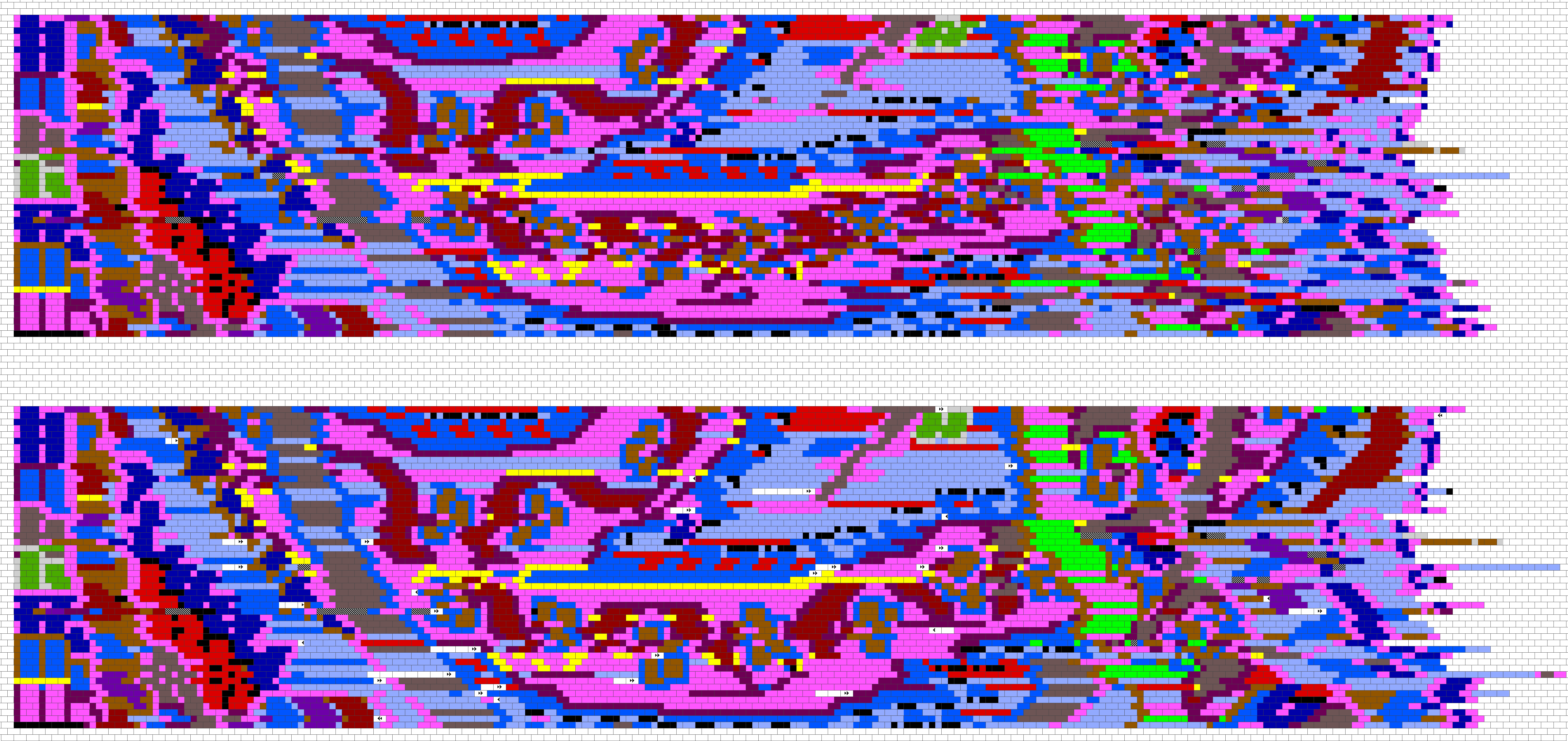
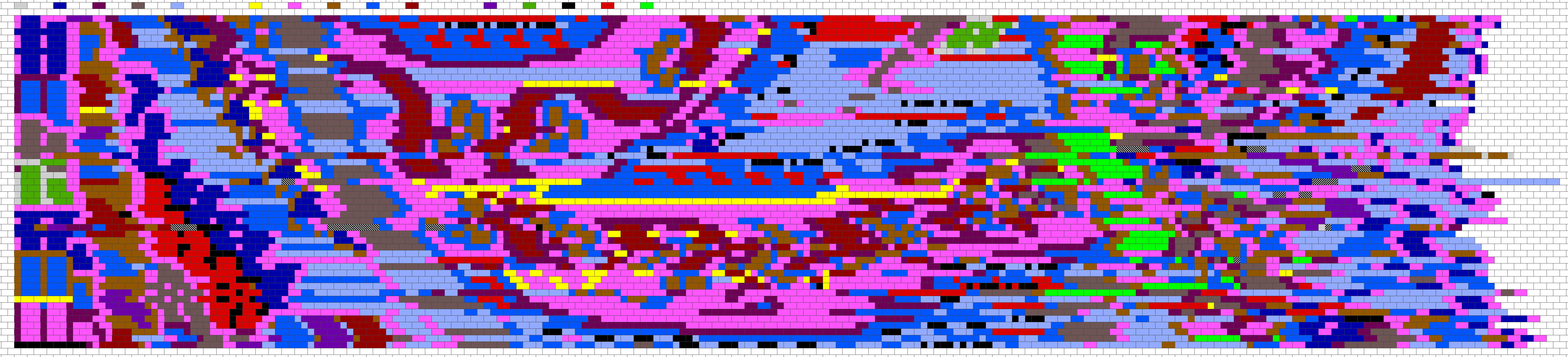
The illustration with two drafts shows the recent draft with my new interpretation of “two-halves” number symbols at the top, and, at the bottom, the result of portions of lines shifted simply by eye to try to bring them into alignment with lines above and below.  To this point I haven’t gone back to the talim text to see if my nips and tucks corresponded to unclear text symbols.  (Each “brick” unit of the grid represents a nal, two raised warp threads and two lowered, and two picks of weaving.)
The most noticeable thing absent from the draft is the rest of a very large design.  Talim lines of 300 nals in width, at an average sett of 80 warps to the inch, would span 15 inches, perhaps half of a centre-field point-repeat pattern, typical of the later 19th century.  The portion shown here would cover about 1.25 by 6 inches.
The most noticeable shapes present are pink on a background of two shades of blue.  On these curving pink bands are segments of dark red meander interspersed with three-petaled blossoms outlined in blue.  The area including the pink bands appears to be enclosed on the left and below by a band of medium grey, and on the right, bright green, next to a more elaborate rope-like band of grey outlined with pink.  On both sides are tendrils of dark blue outlined with pink, and blue background areas display intermittent black and red details.  The colours representing the various colour notations in the talim were arbitrarily chosen for high contrast, and no attempt has been made to “correct” scattered, seemingly inconsistent colour details.

portion of the talim as drafted

The accumulated errors could be due to any combination of fumbles, blots, and scratch-outs visible in the text, similar errors innocently recopied in a fair hand for the text that we have, and my own misinterpretations and lapses.  Among the talim texts I’ve worked on there has been a wide range of accuracy, some producing a clean design and some fit only to be sold to tourists as an artifact.
This talim is obviously a small slice of a very large design, and I have seen some ambitious, similarly-large designs being woven today, perhaps encouraged by the CAD software developed for the carpet industry that is also being used to prepare shawl talim.  But this talim is unique of those I’ve seen, and exceptionally challenging for the weaver, for its use of so many half-nal details.  In fact, it is hard for me to imagine that the specification of such hair-splittingly fine detail would be needed in such a large-scale design.
I have purposely scanned the talim pages at a high resolution so that the reader can copy them (start by clicking on the image) and take up the challenge of trying to produce a draft showing the design clearly, colours traditionally associated with the talim symbols, or what are the misinterpretations of number symbols that I am still making.  Your comments are welcome.

Central Asia then and now

•12/10/2012 • Leave a Comment

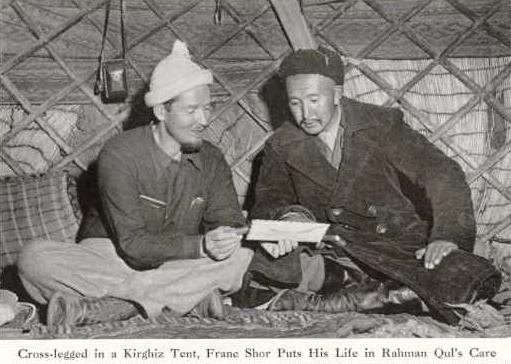
Recently I was reading the “Babur Nama” (in a translated and abridged Penguin Classics edition), the vivid and highly personal autobiographical journal of Babur, the conqueror and founder of the Mughal Empire dynasty in early 16th-century India.  A descendant of both Emir Timur and Chingiz Khan, his early territorial wins and losses took him back and forth across central Asia from Andijan to Samarkand and Kabul, and I went to the back issues of National Geographic (I have the CD set) looking for images of the landscapes he was traversing.  National Geographic seems to have a fascination for Afghanistan – the former king M. Zahir Shah was a noted subscriber – and several teams of authors have reported on their treks along the Wakhan Corridor, a narrow strip of rugged terrain separating what was then the Soviet Union and Pakistan, leading up to the western tip of China.

In an earlier account published in the November 1950 issue, the authors Franc and Jean Shor describe how, having reached the limit of the effective protection of their Afghan military escort, they put themselves in the hands of a local Kirghiz clan leader Rahman Qul in order to complete the furthest stage of their trek.  In an eerie epilogue to their tale of surviving the rigours of the trail, they hear more about their guardian:
“Two years before, the mayor began, Rahman Qul and his tribe had crossed the Russian Pamirs.  There they had robbed a caravan and murdered every man in it.  Pursued by the Russians, they had fled into Chinese Turkistan and taken up residence near the border post of Mintaka.
“Rahman Qul had become a close friend of the commander of the little Chinese border garrison.  Less than a month before we met him he had invited the commander and his garrison of eight men to a lunch on a Mohammedan festival day.  While the Chinese were eating, Qul’s tribesmen had stolen into the tent behind them and murdered every man in cold blood, the mayor reported.  They had looted the garrison of guns, ammunition, horses, and supplies, and fled across the Afghan border to resume residence on the Pamir Plateau.”
Twenty years later in an April 1972 article, a different pair of authors Roland and Sabrina Michaud setting out on the same trek from Kabul described the help they received from their “friend” the tribal chieftain Rahman Qul, and showed him the photograph of himself in the earlier article.  Thinking that Rahman Qul had not only survived but perhaps also risen above his earlier reputation as a “highwayman”, I searched the web and found an article by M. Nazif Shahrani from the Spring 1984 issue of the journal Cultural Survival Quarterly, that added much to his story not only since but also before his encounters with these foreign adventurers.
His group of nomadic pastoralist Kirghiz fled their traditional homeland in one of the remotest corners of the USSR in the face of mid-1920’s efforts to enforce the Soviet policy of resettlement on collective farms.  They settled in the Wakhan Corridor, but after Soviet military cross-border raids in 1946 they shifted to Chinese territory in the Pamirs, only to return 3 years later after the Chinese Communist revolution in 1949.  This much of the story ties in with the less-sympathetic version told in the 1950 article.  Until the late 1970’s this Afghan Kirghiz community of fewer than 2000 enjoyed stability, recognition from the Afghan government, and increasing prosperity, under Rahman Qul’s strong leadership.  But after the Communist military coup and subsequent Soviet invasion in 1978-79, the Kirghiz, led by now Haji Rahman Qul, sought refuge in the northern areas of Pakistan.  There they languished for four years in the relatively hot, lowland climate, with no land base to practise their pastoral lifestyle.  Haji Rahman Qul tried to rally his scattered community and seek a more promising homeland, first in Alaska but the US was unresponsive, and finally in Turkey.  In 1981, along with a number of other ethnic-Turkic Afghan refugees, Turkey accepted the Kirghiz group, who were resettled in a village built for them in the eastern province of Van.
“The critical role of the Kirghiz khan, Haji Rahman Qul, now referred to in the modern Turkish vernacular as Agha (chief), cannot be overestimated in the continual struggle of his community for survival. Through the strong will of this remarkable traditional tribal leader, the Kirghiz have been able to preserve the integrity of their community, although in the process a way of life has vanished forever.” (M. Nazif Shahrani)
Haji Rahman Qul, as Babur would have said, went to God’s mercy, in 1990.
The history and current status of his Kirghiz community in Turkey is the subject of a good-natured documentary film “37 Uses for a Dead Sheep” (2006) by Ben Hopkins.

Once upon a time in Aleppo

•05/10/2012 • Leave a Comment

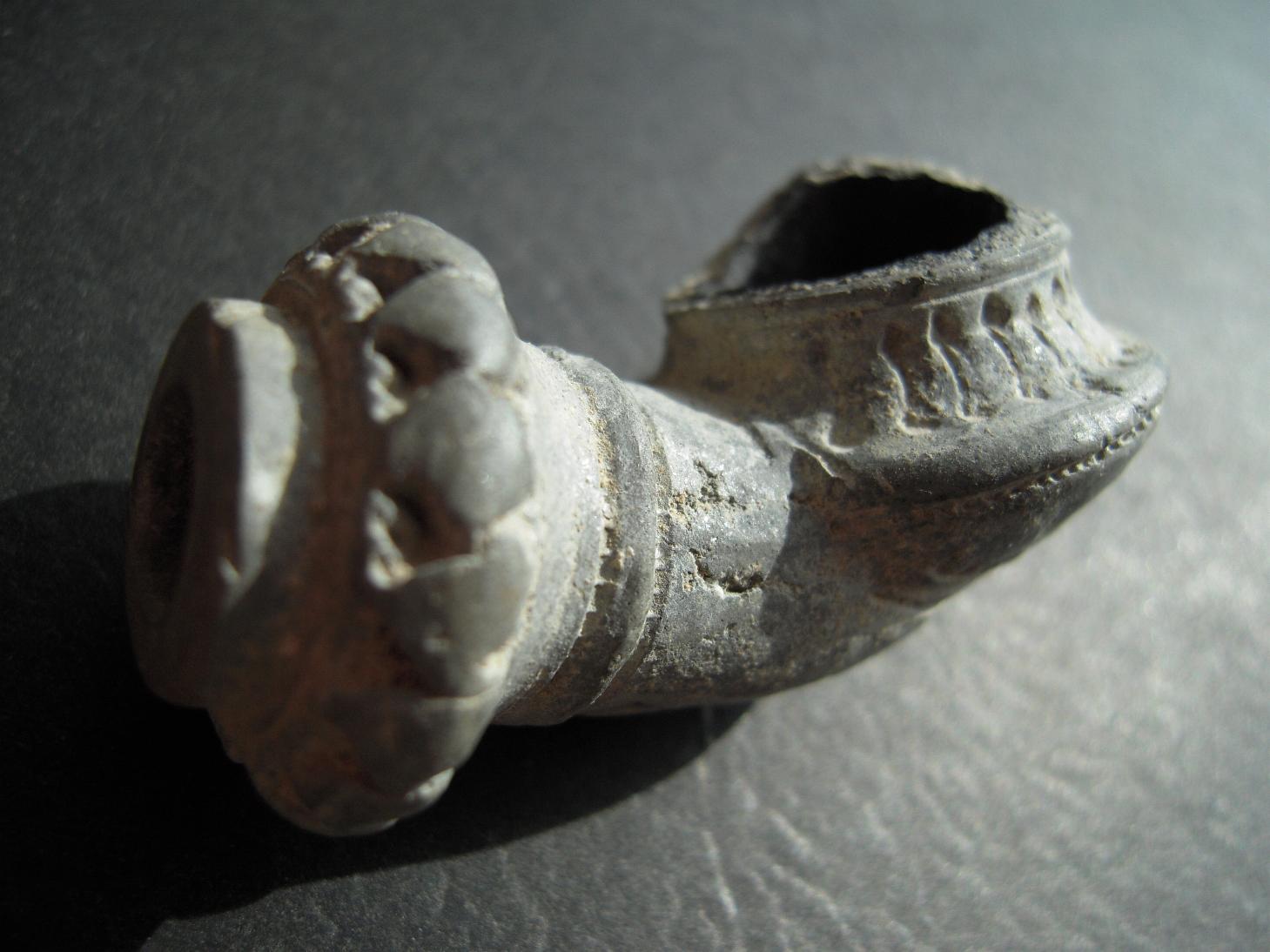
Like a four-leaf clover, I found this without looking in the grounds of the Aleppo citadel overlooking the city. I’m told it’s not particularly old or rare, so I don’t think I was raiding Syria’s cultural patrimony. For me it’s a talisman, a connection…and if it were still lying there now, what?

I remember once, there were two of us waiting to catch a train from Aleppo to Baghdad – this was in 1973, ancient history.  It was winter, so it was freezing cold, and in the evening, and the train was going to be delayed for hours.  We were knocking around the deserted streets looking for somewhere we could get another hot meal before two days on the train.  About all we could find was tea and backgammon, but we met this young guy who offered to open a can of beans or something, you know what I mean, nothing fancy, back at his place, so we did that.   Traditional ethic of hospitality meets one-world, back-street travellers, right?  You could tell that we were stretching his resources but it wasn’t serious.  We were just sitting around – he was a Palestinian, a university student – it was interesting talking for a while.  Then it was getting late and my friend kind of suddenly mentioned he was thinking of heading back to the train station, and I could stay there longer if I wanted.  The only thing that went through my mind was, it was the middle of the night, I think I know how to get back to the station, when is the train going to be ready to go, what would happen to my checked knapsack if it went without me?  No, I was ready to go, and we left.  Later he said to me, that the student was trying to pick me up, and he thought I might have wanted him to go by himself.  All this was news to me, that’s how naïve I was.  Probably I wouldn’t have done anything different, and playing stupid was the best move all round; for actually not seeing it happening, I get no points.
Anyway, back at the train station, there wasn’t going to be a train anytime soon, and we wound up sitting in the stationmaster’s office because it was the only enclosed space and there was one of those little kerosene stoves where you could watch it drip, drip, drip into the burner.  We were always so grateful to be around one of those in that part of the trip, so we sat and drank little glasses of tea, smoked (everybody did), didn’t get much more to eat, and just talked and talked, about that, and a million-and-one things, all night long.  It was special, and I’ve always remembered it, although the whole trip was full of things like that, not because I almost got seduced, but because I didn’t, and went on from there to have a bottomless kind of intimacy, just talking, that doesn’t happen nearly so often.  Any two people can do that, they just have to be ready and open to it, and it’s nobody else’s business if they do.  It’s such a gift, and it shows how boxed-in we are in society that it’s so rare.

How to identify your paisley shawl

•03/08/2012 • 3 Comments

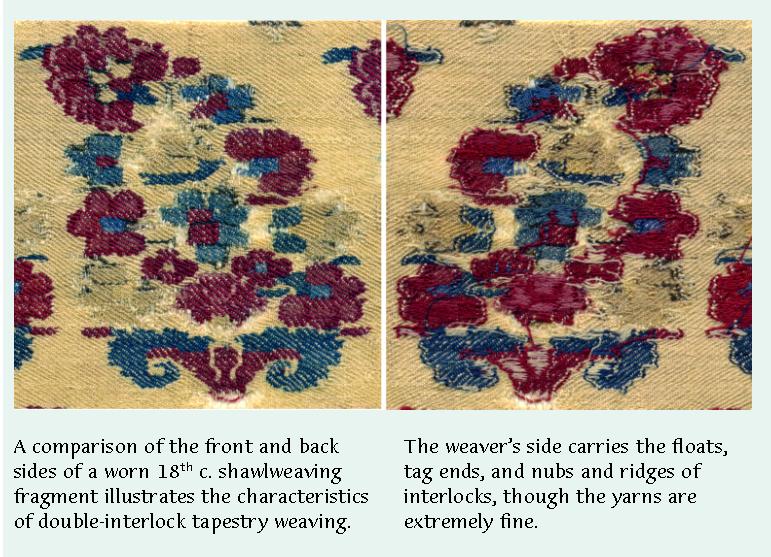
18th c. Kashmiri tapestry shawl detail

The best way to tell if a shawl is tapestrywoven, Jacquard-woven, or embroidered, is to take a close-up look at the back.  If it’s tapestry, there will be little ridges at the boundaries of colour areas where the neighbouring wefts interlock and turn back on themselves (along with some floats in different directions and tag ends).  If it’s Jacquard or loom-woven, there will be a lot of parallel weft-wise floats where the coloured wefts skip from one detail to the next (these floats may be trimmed off, leaving tufts of cut ends).  If it’s embroidered, it will be covered with floats going every-which-way.
In all three cases, the warp threads will be one continuous colour, or stripes, unless the shawl is composed of patchwork pieces, either according to the original design, or reassembled from salvaged strips and fragments.
Tapestry, the original technique of the Kashmir shawl, implies “discontinuous wefts”, threads of the required colour that are woven back and forth in the area where the design requires the colour, and that join with neighbouring wefts to form the fabric as a whole.  “Discontinuous” means there are no wefts that pass from selvedge to selvedge of the whole width.  On the back of the cloth there will be slight bumps and ridges where the two neighbouring colours loop around each other.  Designs for tapestry technique can feature distinct areas of any number of colours, because each is a separate weft thread.  Because it is a hand-controlled process depending on the skill and patience of the weaver, very few “paisley” shawls were tapestry-woven in the West.
When the fashion for Kashmir shawls took hold in the West at the beginning of the 19th century, the manufacture of shawls there was based on loom-controlled weave structures that copied and adapted the appearance of Kashmir shawls.  It was just at this time that the Jacquard mechanism was invented.  Instead of weaving-in each different-coloured weft step by step across the width of the fabric, all the warps controlling design details of a certain colour are lifted at once and a shuttle inserting that colour weft is passed from edge to edge.  Where that colour doesn’t appear on the front, it is carried across the back in floats.  If the shawl design calls for many colours, a mass of floats will build up on the back of the cloth, that may be sheared off in the finishing process.  The limitations of this loom-controlled process led to designs using as few colours as possible, appearing in as many details as possible.  Loom-controlled shawls tend to show designs with a limited palette of colours and a homogenous distribution of small details (which as a tapestryweaver I have taken repeated pleasure in referring to as “soupy overall harmony”).  Unfortunately, the popularizing of these design characteristics in Western markets prompted Kashmiri tapestry shawl weavers to adopt stripped-down palettes and proliferating details, even though they were not subject to the same technical limitations.  Even the term “paisley” applied to shawls of this style, was the place name of a weaving town in Scotland, now part of metropolitan Glasgow.
Highly skilled embroidery has played a variety of roles in Kashmir shawls.  Requiring almost no tools, it can be done anywhere by any number of workers.  On plain-coloured cloth, embroidery has a natural affinity for the fluid, painterly designs typical of Kashmir shawls.  Tapestrywoven shawls with background colours roughly blocked in can be intended to be finished with embroidered detail.  In the finest examples of these, embroidery covers the tapestry weft joins so that the back of the shawl is as presentable as the front, or diagonal rows of tiny stitches fill areas to imitate the traditional twill weave structure.  Fully tapestrywoven shawls may still have some embroidery added to outline, emphasize, or correct parts of the design.  Stitchery is used to invisibly join the separately-woven, coordinated pieces of patchwork shawls, or to recycle fragments of damaged or unfashionable shawls into new assemblages.  And the embroiderer’s services were regularly used to repair the wear and tear noticed when shawls were brought out at the onset of the winter season.  Whether it’s crudely obvious on the back of the fabric or not, to the eyes of a weaver the distinctive character of stitchery is that it’s not limited by the perpendicular logic of warp and weft.

Nightscapes

•25/06/2012 • Leave a Comment

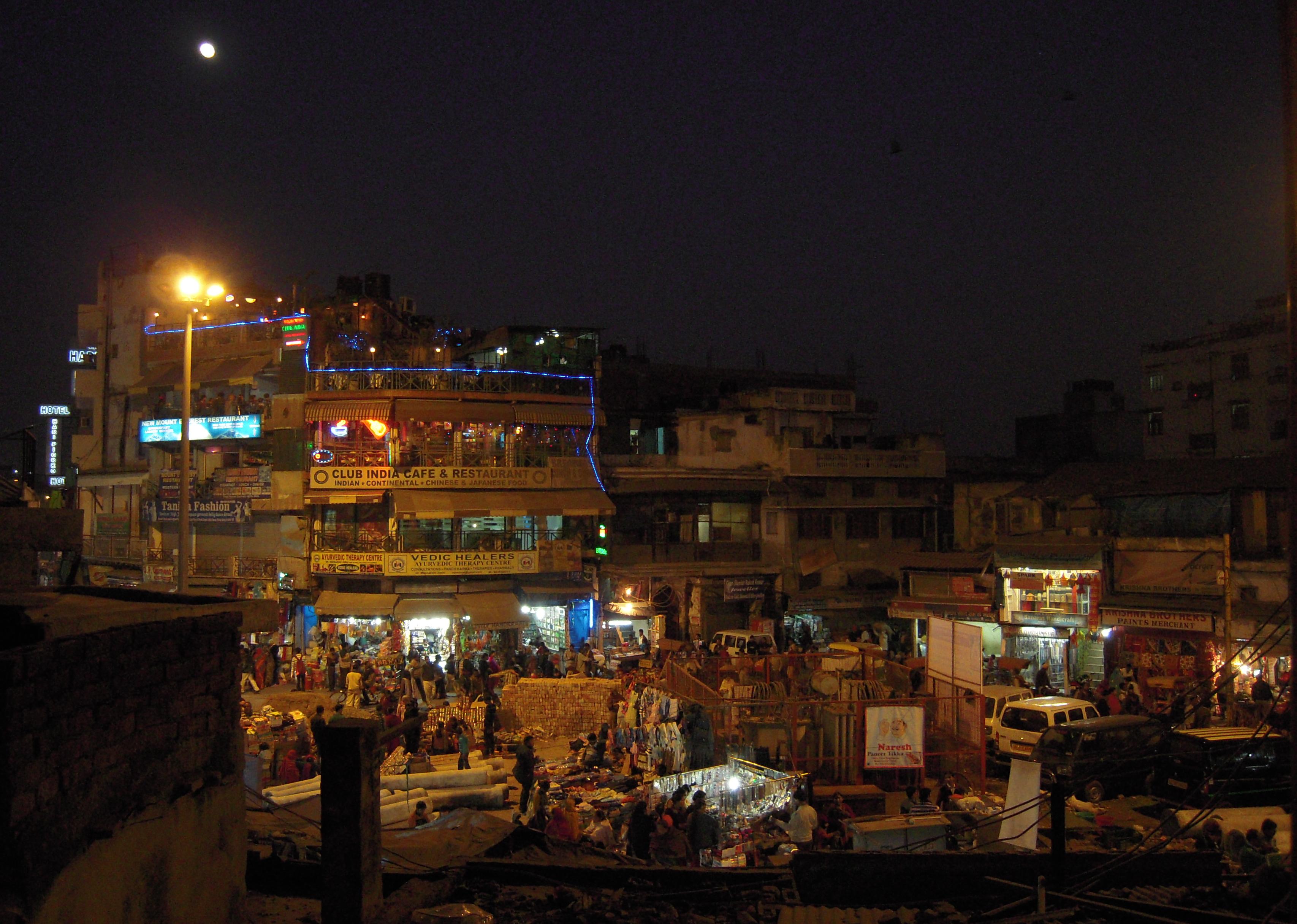
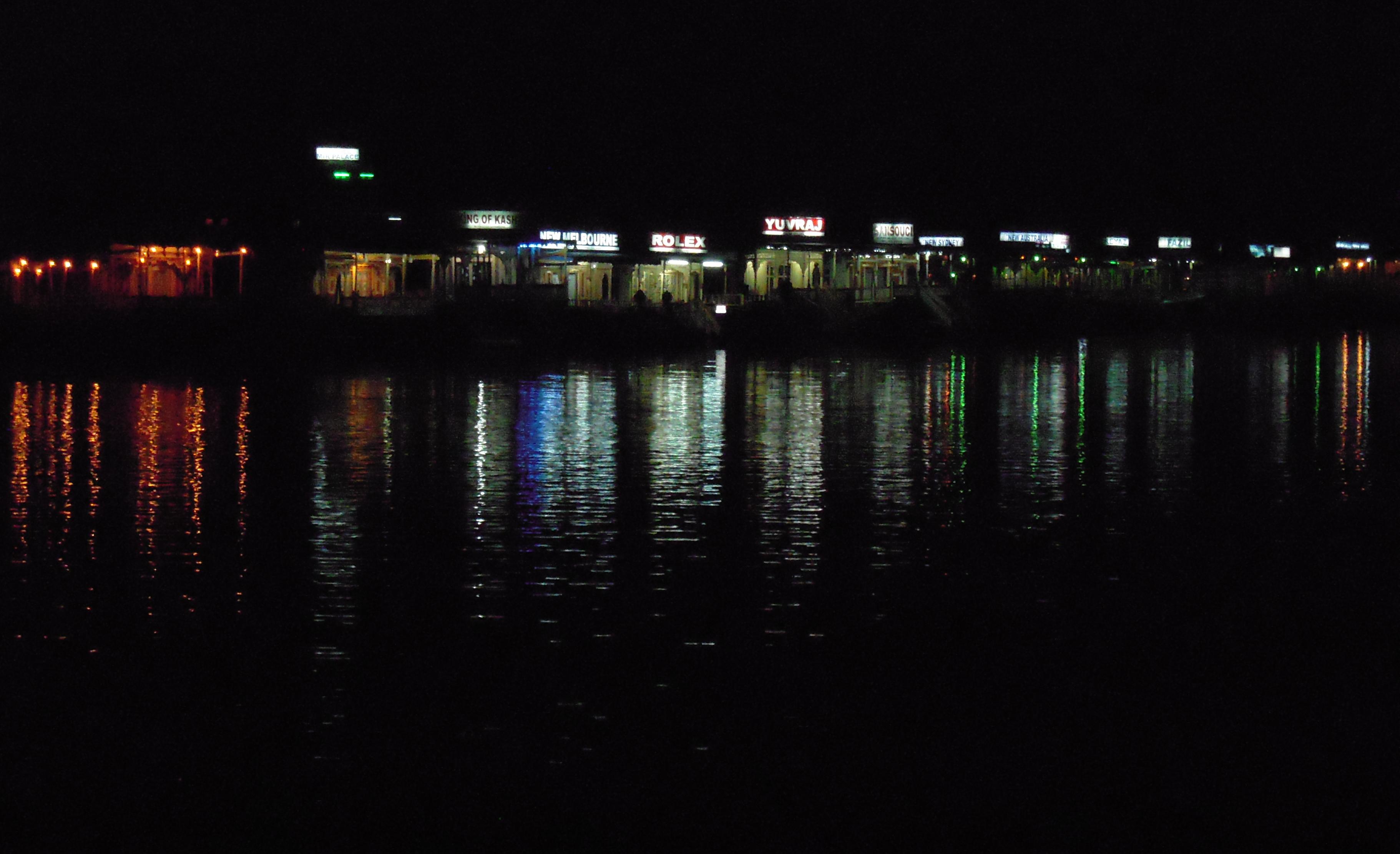
Tooti Chowk, Paharganj, Delhi

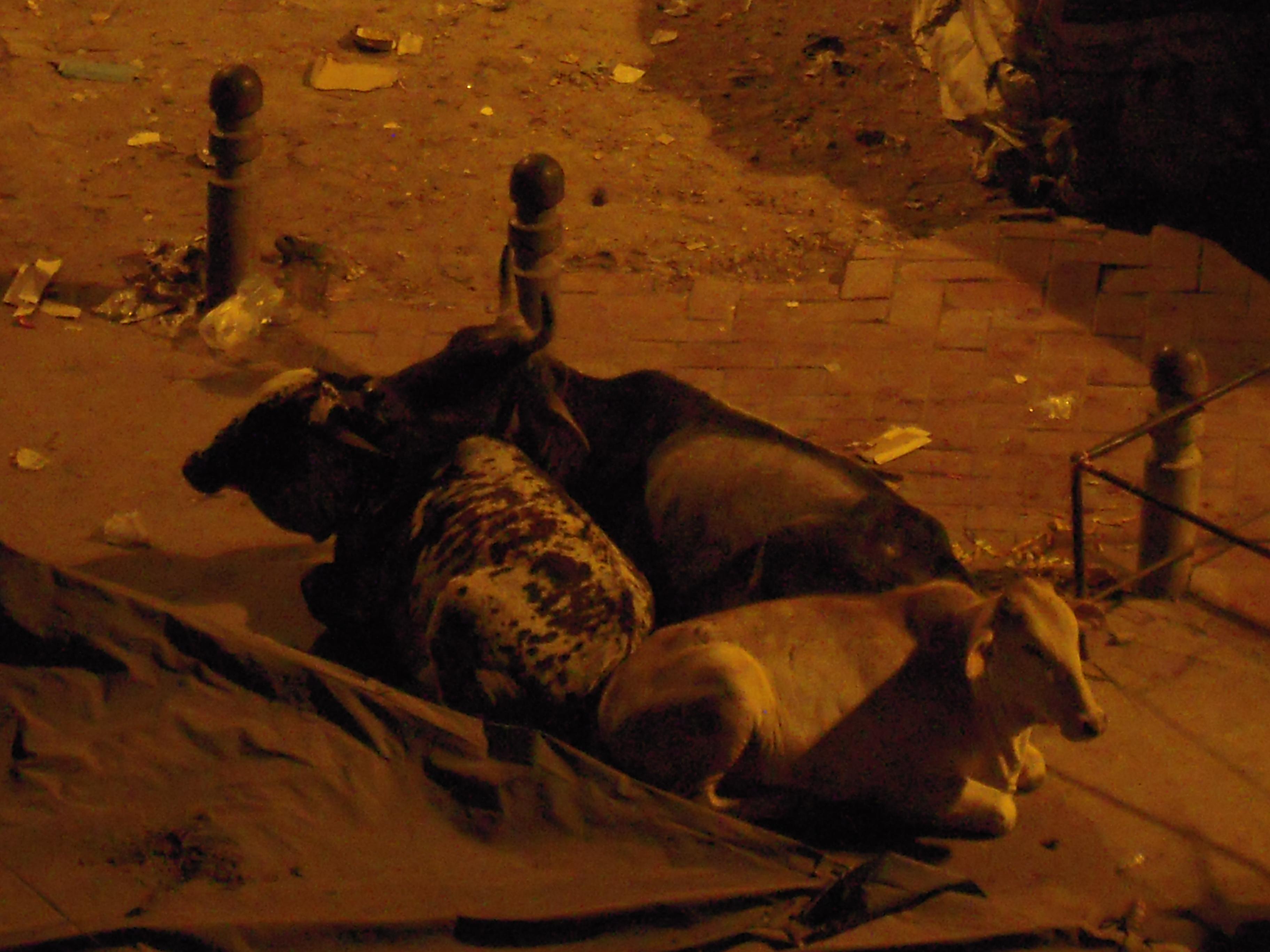
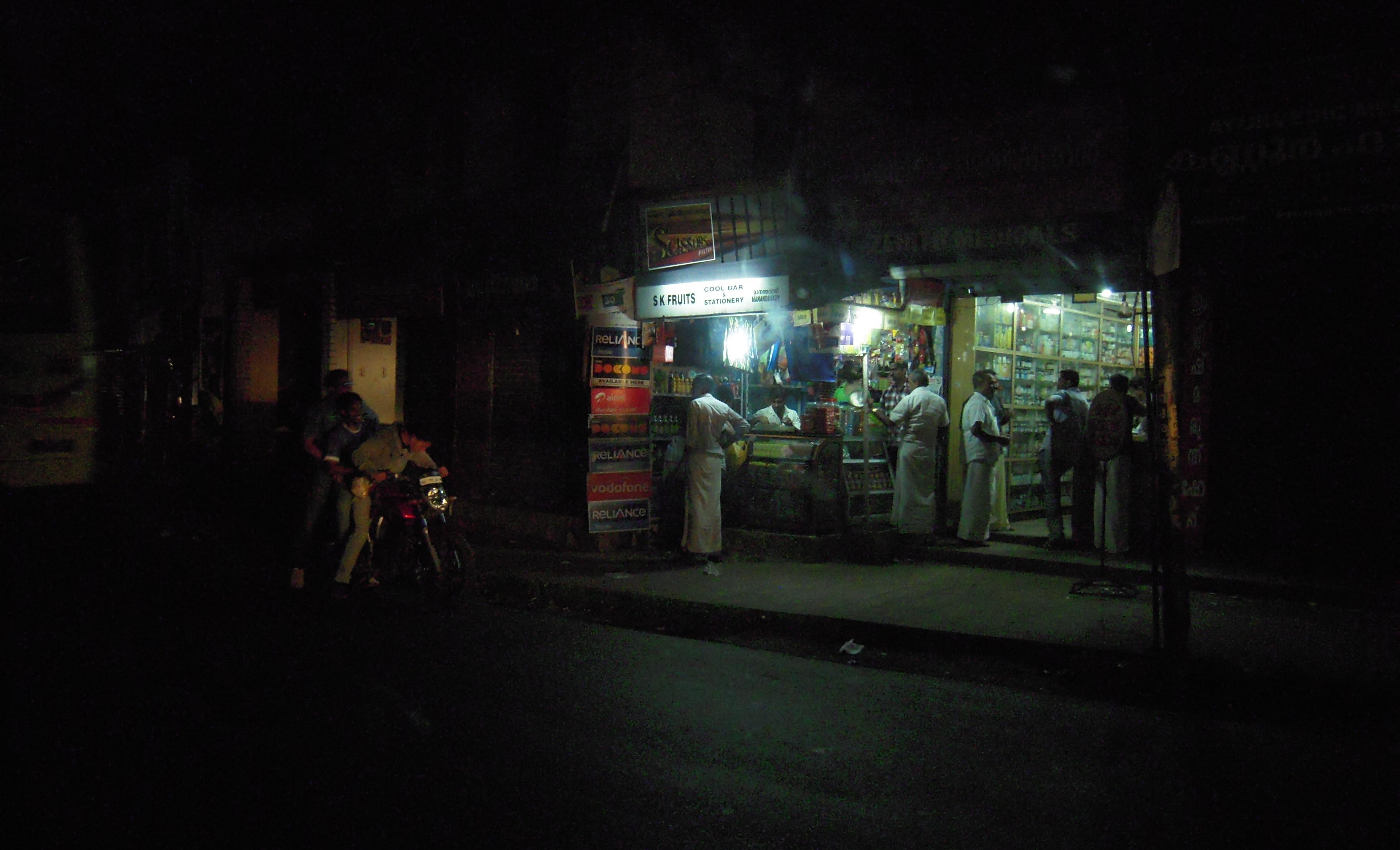
For me the biggest advantage of transitioning (whether I wanted to or not) to a digital camera, is being able to see immediately if the photo I just took is successful, or how to make the next one better.  This is especially true in low-light situations – shots I would have thought in the past were hopeless.  I just have to remember to hold the camera steady.


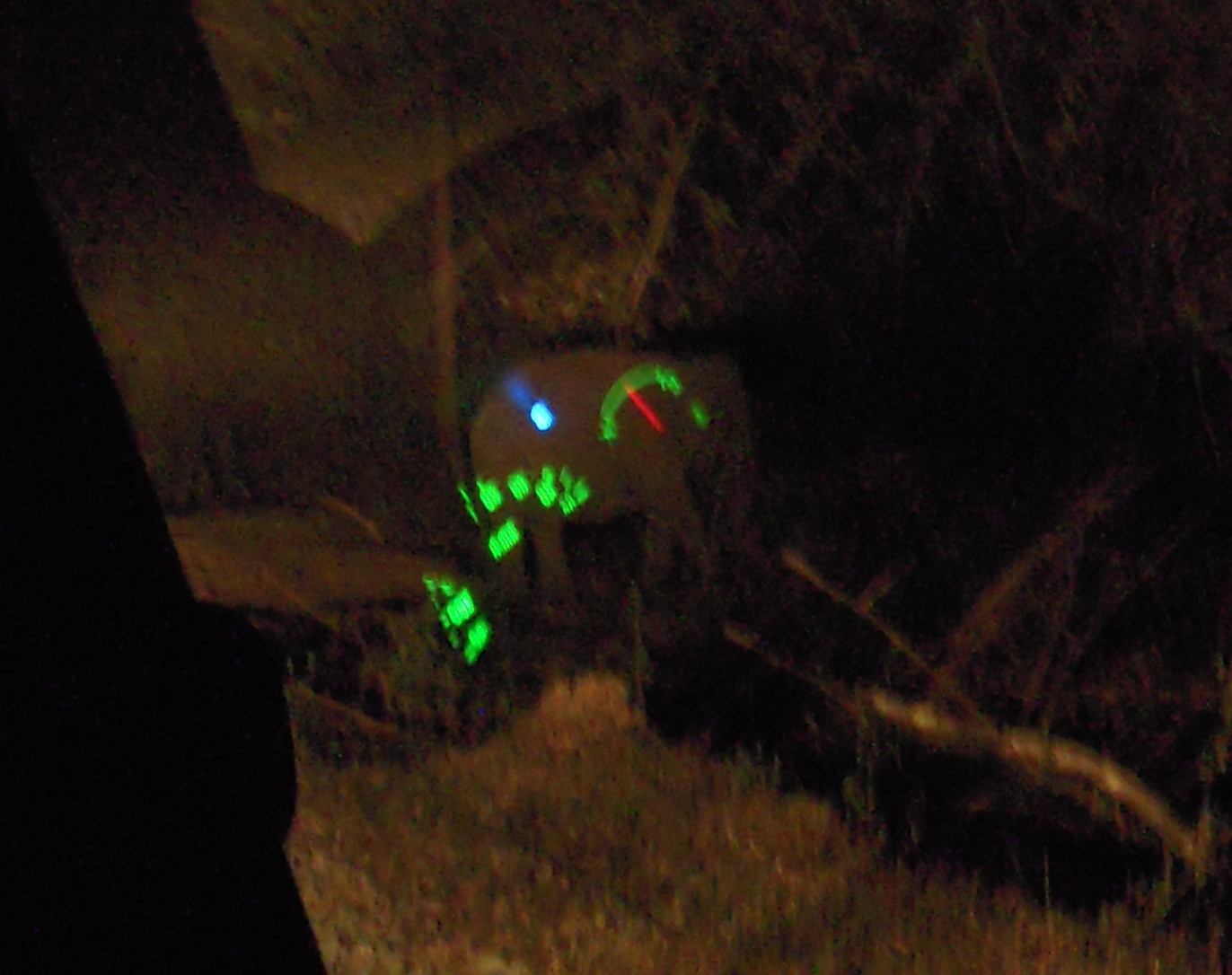
Photos from the car window of wild elephants browsing at the roadside in the Wayanad Hills of south India, were still marginal at best.  I wasn’t using flash, to avoid startling the elephant, and so once the headlight beams had gone past the elephant, I was on my own.  It’s more vivid in my memory.